Opinios
Blackpool FC Under Simon Sadler: From Early Hope To Relegation Fight

When Simon Sadler acquired Blackpool Football Club in June 2019, supporters welcomed the end of a turbulent era and looked forward to stability, transparency, and ambition. Seven years later, the club’s trajectory reflects both progress and persistent challenges. While Sadler’s custodianship has delivered professionalisation and community engagement, The Seasiders now face financial strain and a relegation battle in League One. This article examines the journey from early optimism to the realities of the 2025/26 campaign.
Simon Sadler and Blackpool: TheOptimistic Dawn:
Sadler, a local businessman and lifelong fan, assumed control at a time when Blackpool required urgent stabilisation. His early tenure was marked by decisive off‑field improvements: enhanced community initiatives, professional operational practices, and renewed engagement with supporters. These changes restored confidence and created a positive atmosphere at Bloomfield Road. Promotion to the Championship in the seasons that followed validated the optimism surrounding his takeover and suggested a new era of competitiveness.
On‑Field Journey: Promotion, Relegation, and the 2025/26 Campaign
The path since promotion has been uneven. Relegation from the Championship in 2023 returned Blackpool to League One, where they have remained for three consecutive seasons. The 2024/25 campaign ended with a respectable ninth‑place finish, narrowly missing the play‑offs.
The current season has been more testing. After 42 matches, Blackpool sit 20th with 13 wins, 9 draws, and 20 losses, accumulating 48 points and a goal difference of –16. Home performances have offered some stability, but away results have exposed vulnerabilities. With only a handful of fixtures remaining, survival is far from assured, and the club’s immediate priority is securing League One status for 2026/27.
Managerial Changes and Tactical Outlook
Managerial transitions have reflected the demands of the campaign. Steve Bruce’s tenure ended in October 2025 after a poor start. Ian Evatt, a former Blackpool player with League One experience, was appointed on a contract running until June 2028. His return brought familiarity and tactical continuity, but consistency has remained elusive. Injuries and squad adjustments have disrupted progress, leaving Evatt with the challenge of stabilising performances in the season’s final weeks. His leadership will be central to determining whether Blackpool avoid relegation.
Financial Realities
The accounts for the year ending June 2025, filed in March 2026, reveal the scale of financial pressures. The club reported a pre‑tax loss of £4.3 million, with revenue declining 9.1% to £8.8 million. Wages amounted to £9.95 million, exceeding income, while reductions in matchday revenue, prize money, and commercial streams contributed to the shortfall. Net liabilities stand at £14.8 million.
Simon Sadler has continued to provide substantial support to Blackpool, with loans reaching £25.4 million through associated entities. This funding has been essential in maintaining operations and avoiding deeper distress. In the context of League One economics, such commitment from a local owner merits acknowledgment, though it also highlights the structural challenges facing clubs outside the top tiers.
Auditors’ Concerns
Auditors noted a material uncertainty regarding the club’s ability to continue as a going concern, explicitly linked to reliance on owner funding. While Sadler’s investment has bridged the gap, the warning underscores the need for improved performance and revenue generation. Without greater financial resilience, dependence on personal loans will remain a risk.
External Factors
Separate legal matters involving Sadler in Hong Kong have added external considerations. He faces charges related to alleged insider dealing from 2017 trades, to which he has pleaded not guilty. The criminal trial is scheduled to commence on 4 May 2026. Club accounts reference these proceedings, though they have not directly interrupted operations. Supporters and stakeholders will monitor developments closely, aware that outcomes could influence perceptions of ownership stability.
Ownership Stability
Despite speculation, Sadler has indicated he is not actively seeking to sell the club, though he remains open to proposals that serve long‑term interests. His communication with supporters has been consistent, emphasising unity during difficult periods and offering incentives to boost attendances. This measured approach reflects a commitment to stewardship rather than short‑term exit strategies.
Community Impact
Community engagement has remained a strength throughout Sadler’s tenure. Initiatives launched under his ownership continue to benefit local supporters, and the bond between town and club endures despite on‑pitch struggles. Attendances have fluctuated with results, but loyalty remains evident. This connection represents one of Blackpool’s most valuable assets, reinforcing the club’s identity and resilience.
Challenges and Opportunities
Operating in League One presents inherent difficulties: limited revenue streams, intense competition, and the absence of consistent higher‑tier income. Blackpool’s experience under Sadler illustrates both progress—professionalisation, infrastructure investment, and avoidance of decline—and the realities of financial dependence.
Opportunities exist in commercial development, stadium and training facility enhancements, youth pathways, and diversified revenue sources. Achieving greater consistency on the pitch would support these efforts, easing financial pressures and strengthening sustainability. The challenge lies in balancing ambition with realism, ensuring that investment translates into competitive success without overextending resources.
Conclusion: A Realistic Assessment
Current ownership has delivered stabilisation compared with the preceding era. The club operates more professionally, maintains strong community ties, and has avoided existential threats. Yet the journey has not fulfilled the sustained success many anticipated in 2019. Current struggles in League One, combined with financial dependence, highlight the demanding nature of EFL football.
The immediate task is survival. Beyond securing League One status, the focus must shift toward building operational resilience and reducing reliance on owner funding. With careful stewardship, improved results, and continued supporter backing, Blackpool retain the potential to establish a more sustainable and ambitious future.
Simon Sadler as custodian of Blackpool is a story of measured progress amid realistic constraints. It reminds us of the complexities facing many lower‑league clubs, where owner commitment often provides the foundation for survival and, with the right conditions, eventual growth.

Estimated reading time: 4 minutes
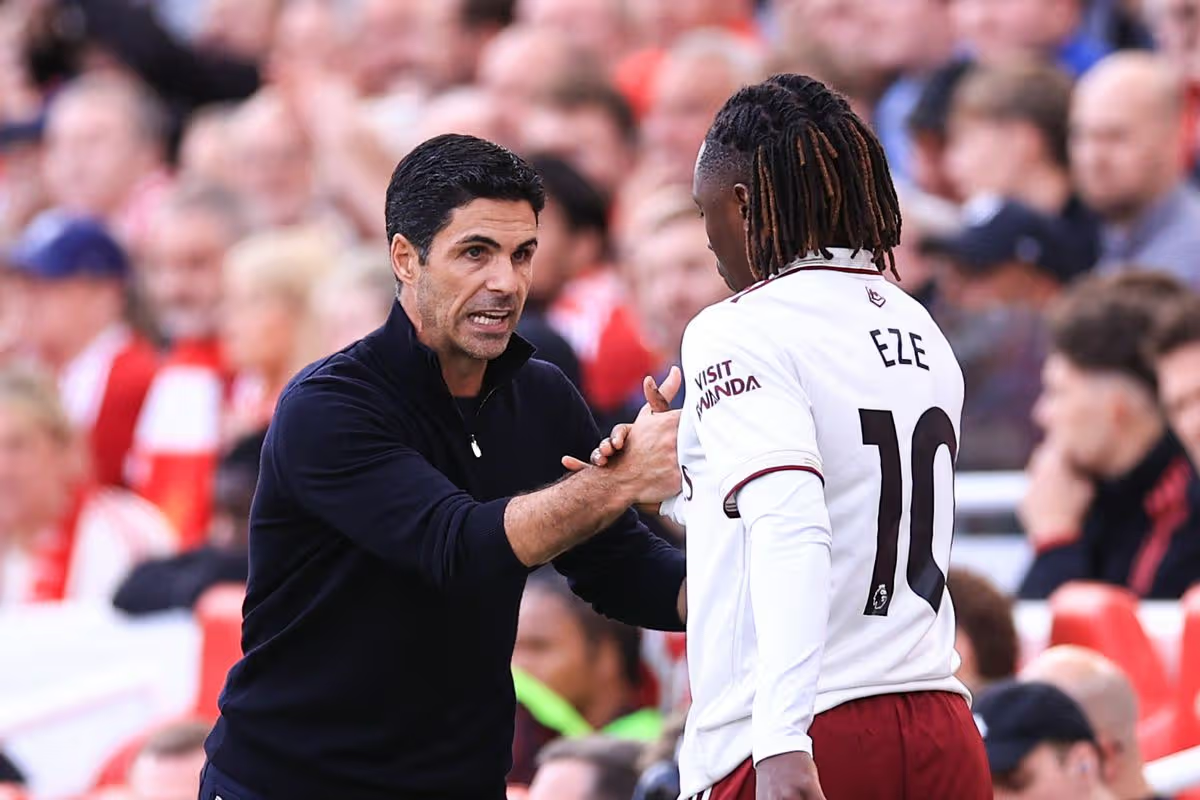
Arsenal currently sit atop the Premier League table with 70 points from 31 games, maintaining a strong position in their bid for silverware across three competitions. However, the calf injury sustained by attacking midfielder Eberechi Eze during the Champions League win over Bayer Leverkusen has introduced fresh uncertainty.
The 27-year-old, signed from Crystal Palace for £67.5 million last summer, scored a memorable half-volley in that tie but was forced off. The youngster subsequently missed the Carabao Cup final which the Gunners lost to Manchester City and also withdrew from England’s March friendlies against Uruguay and Japan.
“We have to do another scan in six or seven days and wait and see the results. It is a leg injury. His calf.”
Arsenal Manager Mikel Arteta said in Post-Carabao Cup Final Press Conference on 22 March 2026 while providing a measured update:
Club sources indicate an expected absence of four to six weeks, although there remains hope for a shorter timeline once the second scan is completed this week.
Eberechi Eze Injury: A Significant but Manageable Challenge
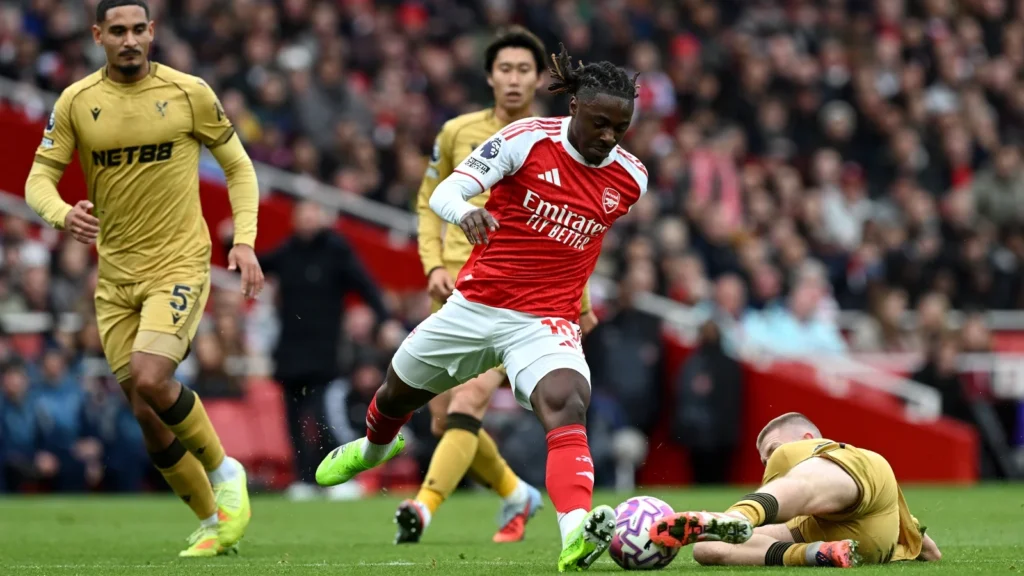
In my assessment, this injury represents a manageable setback rather than a season-defining blow. The midfielder had quickly established himself as a creative outlet with close control, progressive carries in tight spaces, and a potent long-range shooting threat — qualities that complemented Martin Ødegaard, Bukayo Saka, and Gabriel Martinelli.
The timing is inconvenient as Arsenal prepare for a demanding April schedule. Yet, the international break offers a timely buffer for assessment and recovery planning. The Gunners have demonstrated resilience earlier this campaign by managing absences of key defenders such as William Saliba and Jurrien Timber while preserving their league leadership. In my opinion, this period will reveal whether the squad’s depth can sustain multi-front ambitions.
Key Games at Risk and Tactical Implications
A four-to-six-week lay-off could see Eze miss several critical fixtures, including:
- FA Cup quarter-final against Southampton on 4 April
- Champions League quarter-final first leg against Sporting CP on 7 April
- Potential Premier League encounters, including the trip to Manchester City on 19 April
Tactically, the absence of englishman will increase the creative burden on the remaining attackers. Ødegaard is nearing a return from a knee issue, which should provide relief, while Leandro Trossard and Emile Smith Rowe offer versatility. Younger prospects such as Ethan Nwaneri may also gain valuable minutes.
I believe Arsenal possess the resources to adapt. Mikel Arteta has consistently emphasised squad rotation throughout a busy calendar, and the side’s ability to maintain top-spot form despite prior injuries suggests a foundation of tactical discipline and mental strength.
International Ripple Effects and Long-Term Outlook
The injury also impacts England’s preparations ahead of the 2026 World Cup, with Eberechi Eze having built a strong case for greater involvement under Thomas Tuchel. His withdrawal highlights how club-level muscular concerns can influence national-team planning.
Looking ahead, successful treble pursuits — as seen with Manchester United in 1999 and Inter Milan in 2010 — frequently require squads to absorb and overcome adversity. The London ’s current standing reflects genuine progress under Arteta. Should they navigate the coming weeks effectively, Eze’s absence may ultimately be viewed as a test that sharpened collective resolve rather than exposed weaknesses.
The second scan this week will bring greater clarity on the recovery timeline. In my view, Arsenal should prioritise a cautious approach to protect Eze’s long-term value while relying on the depth they have assembled. Over-reliance on any single player carries risk, but the squad’s demonstrated character this season provides grounds for cautious optimism.
Final Thoughts – Depth and Discipline Will Decide the Outcome
Eberechi Eze’s calf injury arrives at a critical juncture in Arsenal’s 2025/26 campaign, testing squad adaptability amid their pursuit of Premier League, Champions League, and FA Cup success. While the absence is significant, I remain convinced that the London side is equipped to respond positively.
The upcoming fixtures will offer a clear indication of their credentials. If Arsenal maintain momentum, this setback could be remembered as a temporary hurdle that reinforced their title credentials. Supporters will watch developments closely, particularly after the scan results emerge.
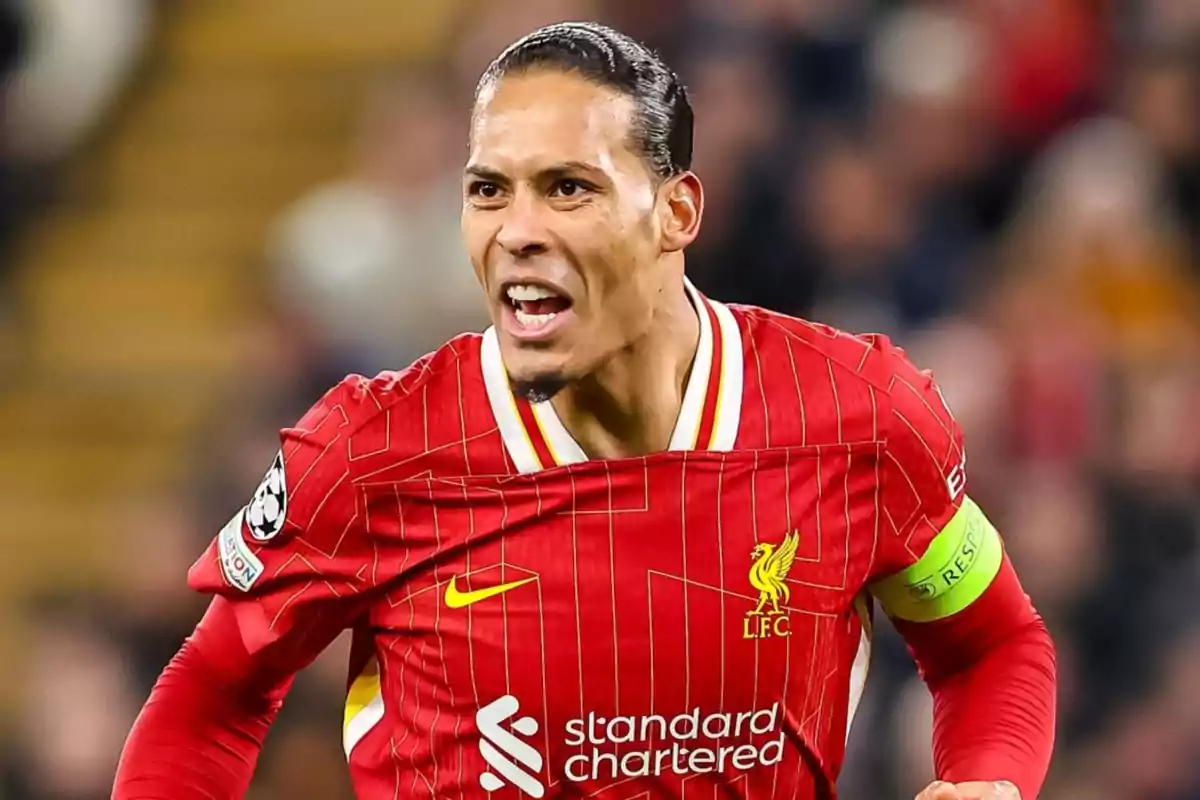
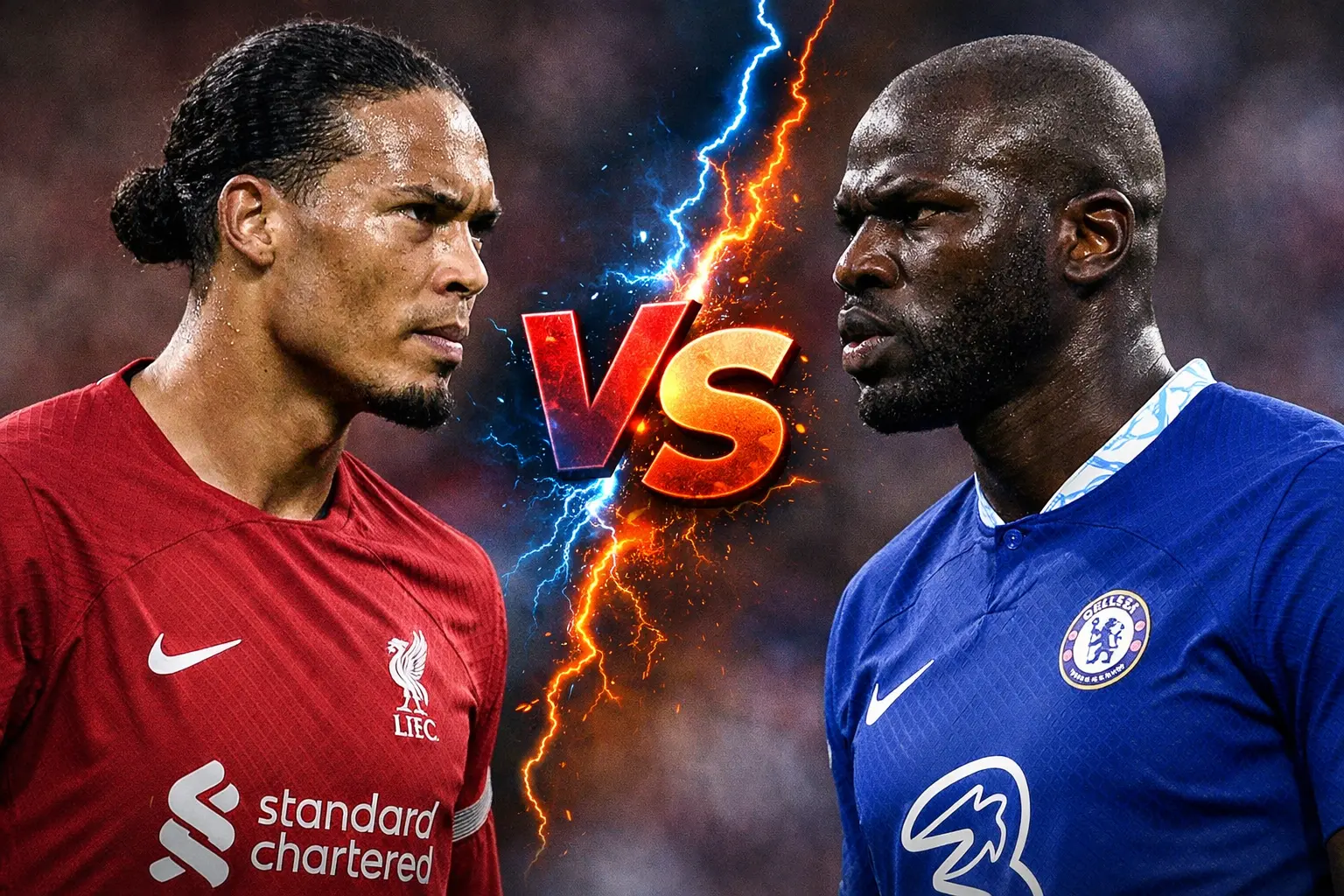
Is Virgil van Dijk overrated? The answer is yes. Never in the history of the Premier League has a player received so many unmerited plaudits as the Dutch professional. This is a defender who once dismissed Cristiano Ronaldo as a non‑rival, a statement that revealed just how inflated his reputation had become. Like many, I was stunned when van Dijk finished second in the 2019 Ballon d’Or, a moment that symbolized the peak of his hype.
Crowned as the “best defender in the world,” Big Virj is nowhere near deserving of that title. Raphael Varane, Matthijs de Ligt, Leonardo Bonucci, and even Joe Gomez have demonstrated qualities that eclipse him. VvD’s reputation has been built on perception rather than sustained excellence, and the evidence from recent seasons makes that clear.
Liverpool’s 2022/23 Season: A Reality Check
The 2022-23 campaign exposed the fragility of the myth surrounding van Dijk. The Anfield club finished fifth in the Premier League with 67 points from 38 games, winning 19, drawing 10, and losing 9. They scored 75 goals, slightly below their expected tally of 84, and conceded 47, which was better than their expected goals against of 58.5 but still far from the defensive dominance associated with Virgil’s peak years.
The defender’s personal contribution was modest. In the league, he played 30 matches, scored three goals from 22 shots, and registered just one assist. He averaged 81 passes per match with a 90 percent completion rate, but these numbers reflect routine distribution rather than game‑changing influence. In the Champions League, he made eight appearances, failed to score, and offered no assists, with his passing accuracy dropping to 87 percent.
These statistics are respectable but not extraordinary. They do not justify the aura of invincibility that has surrounded the Dutch professional. Goal.com’s assessment of Liverpool’s season rated him five out of ten, describing him as another player who fell short of expectations. He endured a poor start to the campaign and looked more uncertain and vulnerable than at any other point in his Anfield career.
Dispelling the “Never Dribbled Past” Myth
One of the most persistent narratives about van Dijk is the claim that he was “never dribbled past.” Earlier in his Anfield career, he famously went 50 Premier League games without being beaten one‑on‑one, until Arsenal’s Nicolas Pepe broke the streak. Before that, Mikel Merino had dribbled past him while van Dijk was still at Southampton.
That record became the cornerstone of his reputation, but it was always misleading. Van Dijk often avoids direct challenges, backing off attackers and leaving his defensive partners to deal with the danger. This tactic makes him appear unbeatable while shifting responsibility onto teammates.
By 2022/23, the myth had collapsed. According to WhoScored, van Dijk was dribbled past 0.3 times per game in the Premier League and 0.4 times per game in the Champions League. In total, he was beaten eight times in the league that season. The image of an immovable wall from the late 2010s has crumbled clearly suggesting that Virgil van Dijk is overrated.
The reality is that van Dijk does get dribbled past, and his reluctance to engage attackers directly often leaves others exposed. Over the past two years, whenever Liverpool conceded, the blame was almost always directed at Dejan Lovren or Joe Gomez and never on van Dijk. His reputation shielded him from criticism, even when his positioning or lack of aggression contributed to defensive lapses.
Reputation vs. Responsibility
This selective protection is part of why van Dijk is overrated. He is praised for calmness and composure, but those qualities often mask a lack of responsibility. A truly great defender dominates his area, imposes himself on attackers, and takes ownership of mistakes. Van Dijk, by contrast, has built a reputation on perception and avoidance.
His aura has created a narrative where he is untouchable, even when his performances fall short. That disconnect between reputation and reality is what makes him overhyped.
Not in the League of the Greats
It is criminal to compare van Dijk to Nemanja Vidic, Rio Ferdinand, John Terry, or Sol Campbell. These men delivered domestic doubles, Champions League triumphs, and sustained dominance across multiple seasons. They were leaders who defined eras of defensive excellence.
Van Dijk, even with one of the best attacking lineups in the world, has never matched their achievements. His peak seasons were impressive, but they were short‑lived. Unlike the greats, he has not sustained dominance or carried his team through adversity.
The Ballon d’Or Illusion
Van Dijk’s second‑place finish in the 2019 Ballon d’Or remains the clearest example of his inflated reputation. That year, Liverpool won the Champions League and narrowly missed out on the Premier League title. The player was central to their success, but his individual contribution was exaggerated into a narrative of invincibility.
The Ballon d’Or result elevated him into a category he never truly belonged to. It suggested he was on par with all‑time greats, when in reality he was the beneficiary of a team at its peak and a media narrative desperate for a defensive hero.
Our Perspective
This article is not about bashing Virgil van Dijk rather it is about perspective. His peak seasons were impressive, and he was instrumental in the Reds’ success between 2018 and 2020. But the hype elevated him into a category he never truly belonged to.
So, is Virgil van Dijk overrated? The evidence speaks for itself but what do you think? Join the debate, share your perspective, and let us know whether the Dutchman truly belongs among the Premier League’s greats.
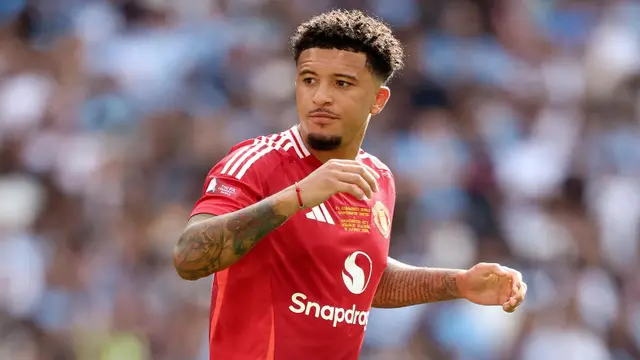
Manchester United were widely hailed as winners of the transfer window after they secured Jadon Sancho from Borussia Dortmund and Raphaël Varane from Real Madrid. Sancho’s arrival finally addressed United’s long-standing need for a right-sided attacker, while Varane brought world-class pedigree to partner Harry Maguire in defence. The £34 million fee for the Frenchman was seen as a coup, underscoring United’s decisive approach under new football director John Murtough and technical director Darren Fletcher.
Edinson Cavani’s contract extension ensured continuity up front, while Diogo Dalot returned from his loan spell at AC Milan to compete with Aaron Wan-Bissaka at right-back. Taken together, these moves gave Ole Gunnar Solskjær a stronger, more balanced squad.
Yet despite the success of the Red Devils in the transfer market, one glaring issue remained unresolved: the defensive midfield. With Nemanja Matić nearing the end of his career and Fred inconsistent, United lacked the steel and control required to challenge for major honours. Wolves’ Rúben Neves, long admired for his passing range and tactical discipline, emerged as a prime target. But if United cannot land him, who else could fill the void?
Marcelo Brozović – Inter Milan
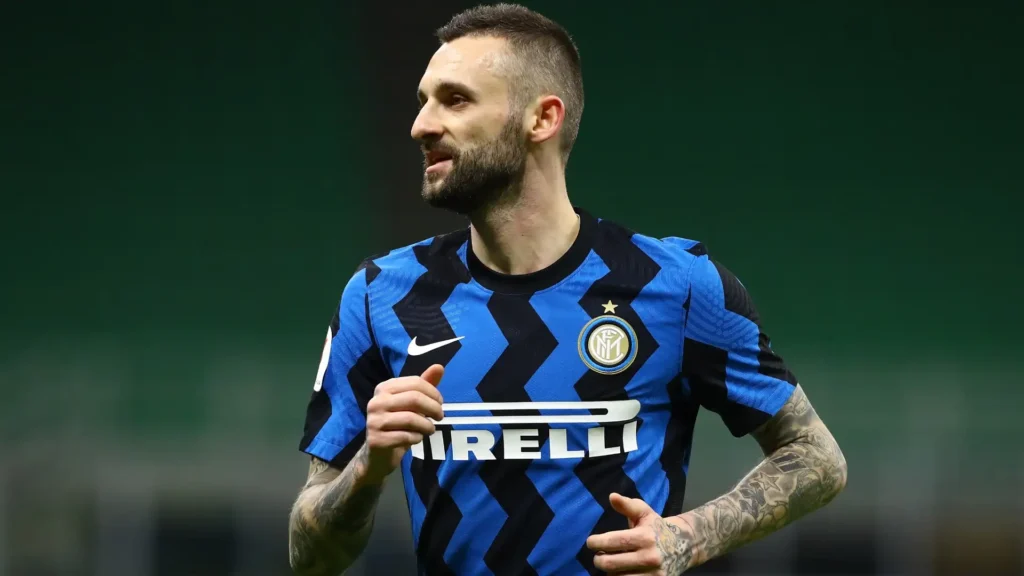
Croatian midfielder Marcelo Brozović flourished under Antonio Conte during the 2020/21 season, adapting seamlessly to a deeper defensive role. In 29 league appearances, the 28‑year‑old registered two goals, six assists, an 89.6% pass completion rate, and averaged 1.6 tackles per game.
Those numbers underline his value as both a distributor and a contributor in the final third. While his passing accuracy is slightly lower than some rivals, his combined goals and assists make him one of the more rounded options on the market. Long touted as a potential partner for Paul Pogba, Brozović could offer Manchester United a balance of creativity and defensive stability.
Inter Milan’s financial struggles add intrigue. The club has been forced to consider player sales, and United may be able to leverage that situation — particularly given outstanding financial dealings between the two clubs following Romelu Lukaku’s transfer.
The emotional factor cannot be ignored: Brozović has been an Inter stalwart for six years, and leaving the San Siro would not be straightforward. Yet if liquidity pressures force Inter’s hand, this could be the moment for United to act decisively and secure a proven performer from Serie A.
Frenkie de Jong – Barcelona
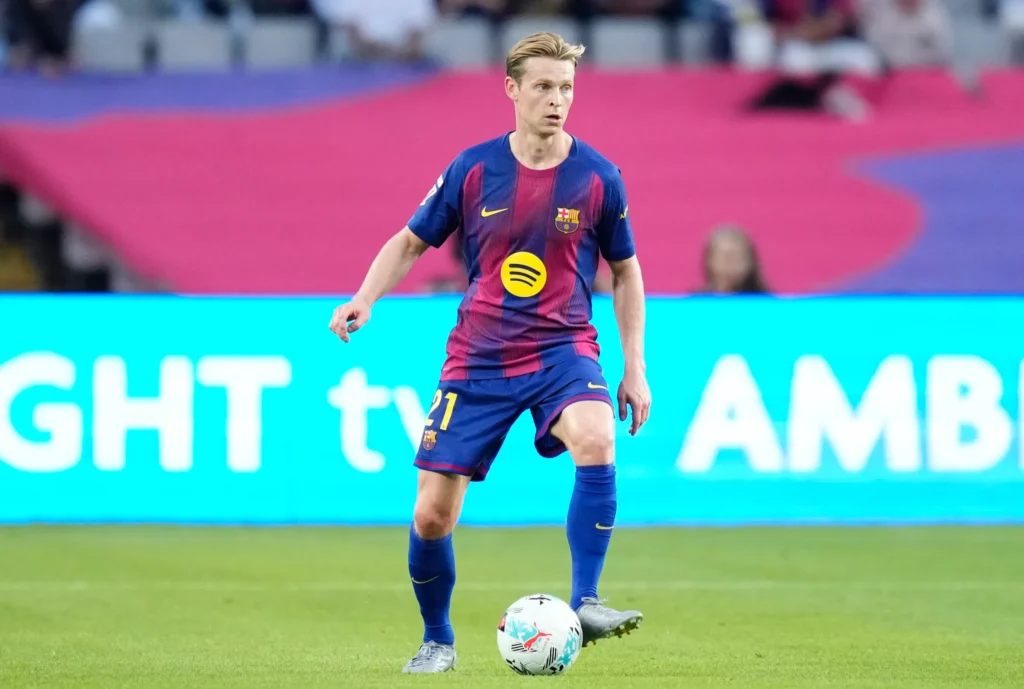
After a challenging debut campaign at the Nou Camp, former Ajax midfielder Frenkie de Jong grew into his role during the 2020/21 season, making 35 appearances and delivering consistently assured performances.
Statistically, his output of three goals and four assists was modest compared to other midfield targets. However, his 91.9% pass completion rate was the highest among the players considered, underlining his ability to control possession and progress the ball. That quality would allow Paul Pogba and Bruno Fernandes greater freedom to operate further up the pitch.
Defensively, his average of 1.2 tackles per game was relatively low, and at 24 years old he would command a significant fee — especially given Barcelona paid a premium to lure him from Ajax. Yet his technical profile makes him as strong an option as Rúben Neves for United’s midfield rebuild.
Barcelona’s financial crisis, with debts exceeding £1 billion, has led to speculation that much of their squad could be available for transfer. Still, manager Ronald Koeman has been clear: he sees de Jong as central to his project. That stance makes any potential move difficult, but in football, circumstances can change quickly.
Wilfred Ndidi – Leicester City
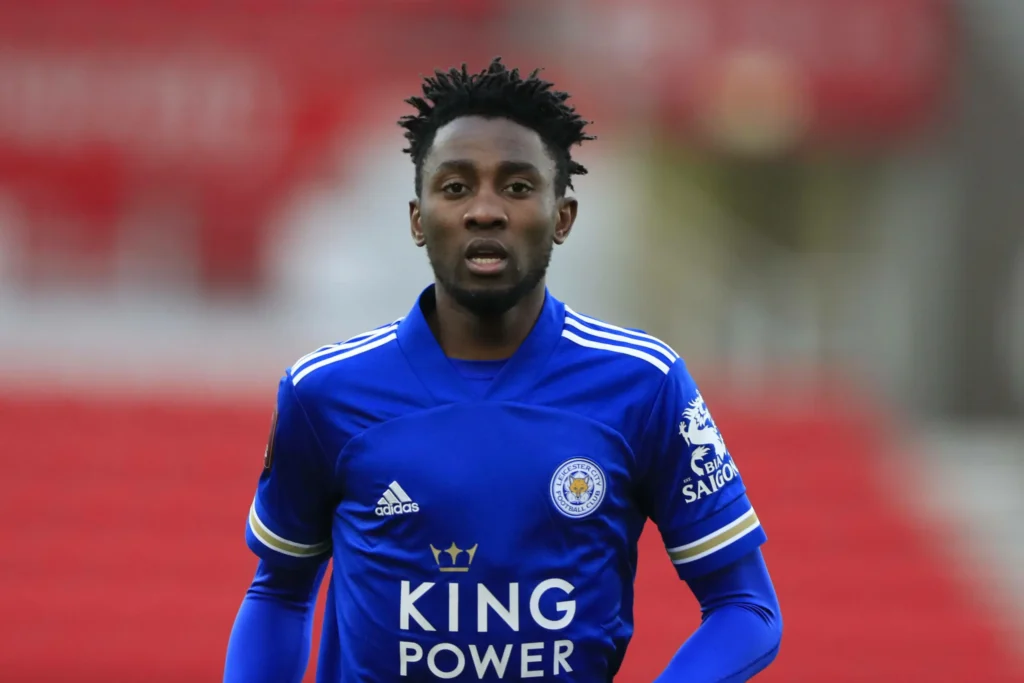
Wilfred Ndidi has impressed immensely since joining Leicester City from Belgian side Genk, stepping into the role once occupied by N’Golo Kanté and filling it admirably. The Nigerian international has not only settled well in the Premier League but established himself as one of its most effective ball-winners.
In 25 appearances during the 2020/21 season, Ndidi recorded one goal and four assists, alongside an 86.9% pass completion rate. While his passing numbers may not match Frenkie de Jong’s, his defensive contribution is unmatched: he averaged a remarkable 3.7 tackles per game, far higher than the other midfielders on United’s radar.
That level of defensive dominance would give Manchester United’s back line invaluable protection, addressing a long-standing weakness in the squad. The major obstacle, however, is cost. Leicester City are under no financial pressure to sell, and Ndidi remains central to Brendan Rodgers’ plans. A deal would likely require a significant transfer fee, or perhaps a player‑plus‑cash arrangement to tempt the Foxes.
Conclusion
All three alternatives — Marcelo Brozović, Frenkie de Jong, and Wilfred Ndidi — bring distinct qualities that could transform Manchester United’s midfield. Brozović offers balance and creativity, de Jong provides control and progression, while Ndidi delivers defensive steel.
Of the trio, Brozović appears the most attainable given Inter Milan’s financial struggles, and his profile makes him a natural partner for Paul Pogba. Yet with time running short in the 2021 transfer window, pragmatism may dictate a move for Rúben Neves. The 24‑year‑old Portuguese international is Premier League proven, tactically disciplined, and capable of injecting much‑needed energy into United’s midfield.
Wolves manager Bruno Lage has already admitted that “every player has a price.” For United, the choice is clear: pay that price or risk another season of frustration. Securing a defensive midfielder is not just about depth — it is the missing piece that could elevate the squad from contenders to genuine challengers for Premier League glory.

 Opinios5 years ago
From Sancho to Varane: Why United Still Need a Midfielder
- Transfer Analysis5 years ago
Should Robert Lewandowski Look to Leave Bayern Munich?

 Opinios2 weeks ago
Eberechi Eze Injury: A Manageable Setback or a Season-Defining Blow?
- Transfer Analysis2 weeks ago
Iconic Mohamed Salah Leaving Liverpool – Saudi Pro League Next?

 Soccer2 weeks ago
Mohamed Salah Replacement Contenders Who Match Liverpool’s Tactical DNA
- Soccer3 days ago
Chelsea Top Four Bid Alive but Fragile: 3 Fixes to Rescue Season

 Soccer1 year ago
Erling Haaland at Manchester City: Is he best striker of the decade?
- Soccer3 years ago
Virgil van Dijk vs Kalidou Koulibaly: Who Is Overrated Among Premier League Defenders