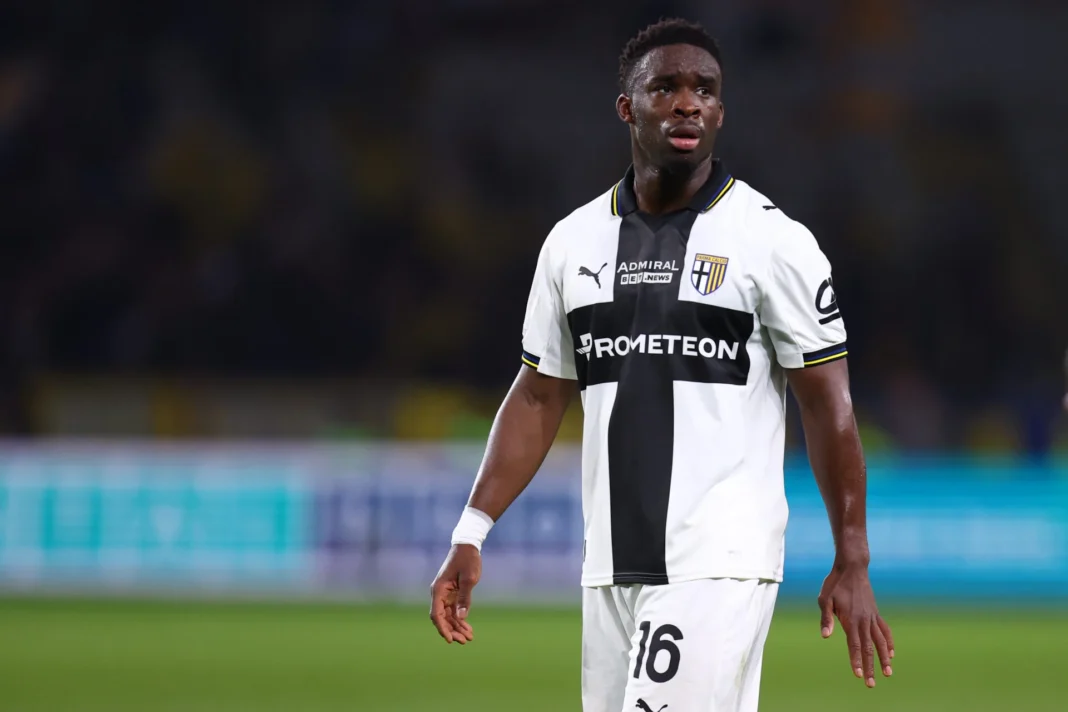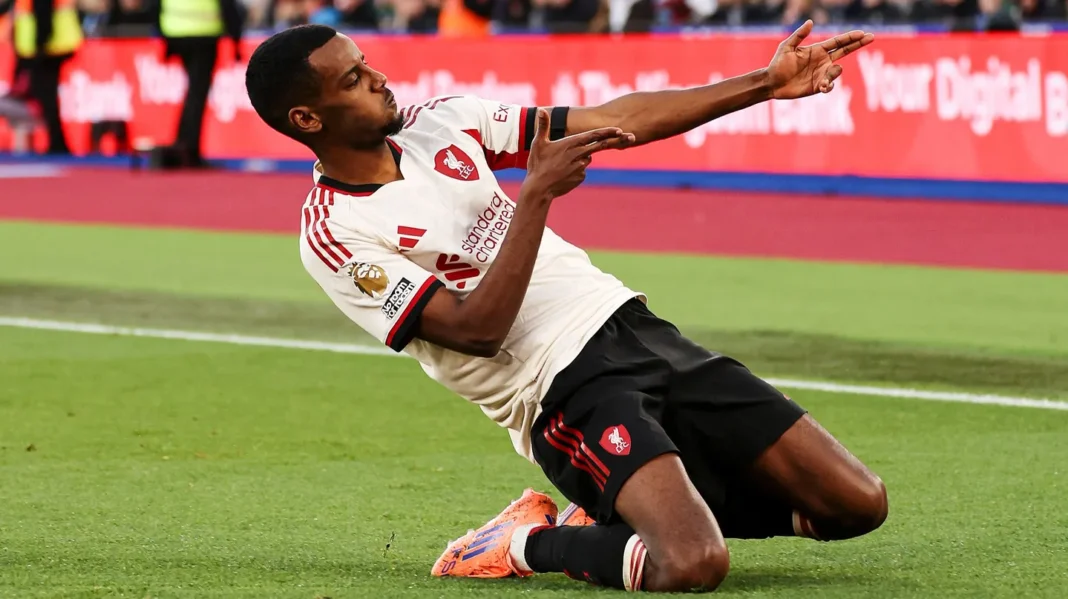

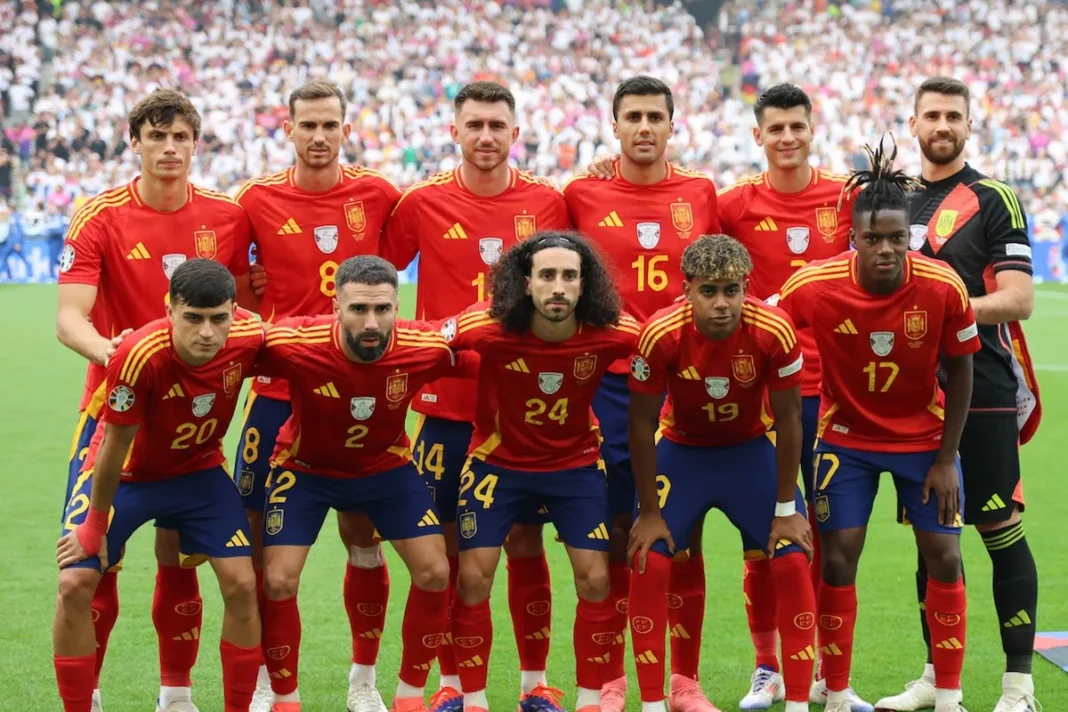

Eight Barcelona players feature in Spain’s squad at World Cup 2026, the largest contingent from any single club at the tournament, and for the first time in the event history not a single current Real Madrid player was selected by Luis de la Fuente. With the group stage complete and Spain through from Group H after two wins and a draw, the Barcelona contingent sits at the heart of everything La Roja are trying to do in the knockout rounds.
Here are the five who matter most.
Lamine Yamal
Lamine Yamal at World Cup 2026 is the reason neutrals are watching Spain. The 18-year-old Barcelona winger, born on 13 July 2007, arrived in North America nursing a left hamstring injury sustained in April 2026 and was eased in cautiously, coming off the bench for 19 minutes against Cape Verde before making his first start in Spain’s second group game. Ten minutes in, he scored his first World Cup goal, converting a Mikel Oyarzabal cross as Spain thrashed Saudi Arabia 4-0, and was withdrawn in the 64th minute with the result long since settled. He started again against Uruguay in the final group game, a tighter 1-0 win that saw Spain finish top of Group H. His underlying numbers from the club season are staggering: 24 goals and 17 assists from 43 appearances for the Catalans in 2025-26, completing 212 dribbles across the campaign and generating 19.0 expected goals.
The debate around Yamal heading into the knockout rounds is not about his talent, it is about whether he can rediscover the form that saw him score a dramatic semi-final equaliser at Euro 2024 before Spain lifted the trophy. If he does, Spain become tournament favourites. If he does not, they still have enough to go very deep.
Pedri
At 23, Pedri González is no longer the precocious teenager who emerged at Euro 2020. He is the engine of this Spain side, the midfielder who covers the most ground, wins possession back highest up the pitch, and consistently makes the right decision under pressure. His 2025-26 season at Barcelona produced 2 goals and 11 assists from 41 appearances, a return built on chance creation rather than end product, a profile that makes clear this is not a player who exists only in the attacking phases.
The honest assessment from Spain’s group stage is that Pedri has not yet hit his peak level. Sports Mole rated him just 5 out of 10 for the Uruguay game, noting his passing “was below his usual standard,” and former Barcelona manager Quique Setién suggested, in comments carried by SPORT, that Spain simply aren’t extracting the best from him in a role different from the one he plays at club level. That’s worth noting but not over-reading. Pedri at 80% is still one of the best midfielders at this tournament, and the knockout stages tend to be where he raises his level.
Pau Cubarsí
Of all the Barcelona players in this World Cup 2026 squad, Cubarsí is the one with the most to gain. The 19-year-old centre-back is making his World Cup debut and has already emerged as one of the clearest positives of Spain’s group stage. Goal.com gave him the highest rating on the pitch against Uruguay, 9 out of 10, for a performance in which he “did not put a foot wrong all match,” and ESPN separately singled him out alongside Aymeric Laporte as the reason Spain’s defence has held firm. His season at club level justified the selection: 48 appearances across all competitions for a Barcelona side that won La Liga while conceding just 28 goals all season, with a single goal at the other end, numbers that reflect a defender trusted with genuinely first-choice minutes at 19.
What makes Cubarsí different is the composure. He does not scramble, he reads situations early, and he steps out from the back with a confidence that most defenders do not develop until their mid-twenties. He is playing in his first World Cup and already looks like the long-term anchor of Spain’s defence.
Gavi
No player in this squad carries a heavier backstory into the tournament. Gavi suffered a devastating ACL injury in November 2023 that kept him out of football for over a year, and his return to consistent club form in 2025-26 was one of the more remarkable rehabilitation stories in Spanish football. He has been at the margins of de la Fuente’s starting eleven so far, with Pedri and Rodri the established midfield pairing, but Gavi offers something no other option in this squad can match off the bench.
What he brings is urgency. Gavi presses relentlessly and wins the ball back in dangerous areas, changing the tempo of Spain’s play within minutes of coming on. If Spain face a knockout-round deficit, that’s one of the most potent game-management tools in de la Fuente’s arsenal.
Dani Olmo
Olmo is the least Barcelona-associated name on this list. He spent his formative years at Dinamo Zagreb and RB Leipzig before joining the club in 2024, having left La Masia as a teenager to develop in Croatia and Germany, and is now fully embedded in both the Barcelona and Spain setups. His route to the top was unconventional by Spanish standards, but the quality was never in question.
At this tournament, Olmo gives de la Fuente flexibility across the front three and as an advanced midfielder, capable of playing centrally or from the left. His ability to press from the front and arrive late into the box makes him difficult to plan for defensively, a role that matters more now that Nico Williams is racing to recover from a right adductor injury picked up against Uruguay and is considered unlikely to be fit for the round of 32. With Spain’s other natural width in doubt, defences can’t simply set up to stop Yamal on the right and assume the middle is safe. Olmo arriving late from deep is exactly the kind of threat that punishes that assumption.
What to expect
Spain’s knockout-round opponents will need to solve a problem that no team managed to solve at Euro 2024: how to stop a side that controls possession and presses high in organised lines, with match-winners scattered across every area of the pitch. Eight Barcelona players in this World Cup 2026 squad is not a coincidence, it is a reflection of a club whose positional football principles are so closely aligned with what de la Fuente demands from his national side that the players arrive already fluent in the system.
Yamal is rounding back into sharpness. Cubarsí is already playing at his ceiling. And with Gavi waiting in reserve, the knockout rounds are where this Barcelona contingent turns properly dangerous.