
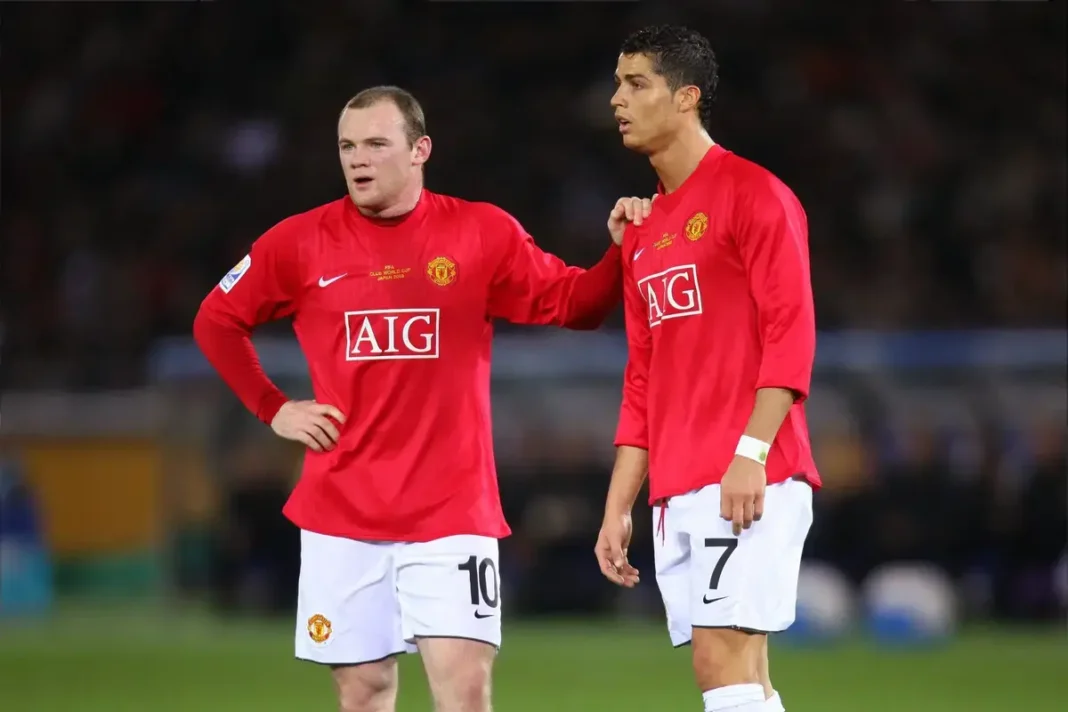

Three games, three wins, top of the table. On the surface, the journey of Old Trafford side under their new manager Jose Mourinho started exactly as planned. Yet beneath the perfect record sits an awkward question the opening weeks have only sharpened: how long can Mourinho justify leaving Henrikh Mkhitaryan on the bench while an ageing Wayne Rooney clings to the Manchester United number 10 shirt?
For £26.3 million, United did not sign the reigning Bundesliga Player of the Year to watch him offer cameos in the closing minutes. Mkhitaryan arrived off a season of 23 goals and 32 assists, numbers built on precisely the qualities Rooney can no longer reliably offer: acceleration into space, dribbling through the half-spaces, and the vertical pass that turns possession into a chance. The case for change is not about disrespecting a club legend. It is about what Mourinho’s system actually demands of its number 10.
What Number 10 Is Supposed to Do
In a 4-2-3-1 built around Zlatan Ibrahimovic, the man behind the striker has a clear job. Ibrahimovic drops deep to link play and occupy centre-backs, which leaves space in behind that the number 10 must attack. That role calls for a player who threatens the last line, not one who comes short to collect the ball in front of it.
This is where the argument against the placement of Wayne Rooney in the Manchester United starting XI becomes tactical rather than sentimental. Rooney’s instinct, increasingly, is to drift toward the ball. He drops into midfield, he comes short, he gets involved in the build-up. Admirable energy, but it pulls him into the same zones Paul Pogba and Marouane Fellaini already occupy, congesting the centre and leaving Ibrahimovic isolated. Two players doing one job is not control. It is duplication.
The Case Rooney Cannot Answer
The defenders of the skipper point to his pedigree, and it is real. Sitting one goal short of Sir Bobby Charlton’s all-time United record of 249, Rooney has earned the right to be discussed with reverence. But reverence is not a tactic. The performances in his natural centre-forward role tailed off so badly last season that Louis van Gaal repurposed him as a midfielder, and the relocation has quietly become permanent. A player shifted twice in eighteen months to accommodate his decline is not a player to build the attack around.
Mourinho himself has signalled the direction of travel. His public criticism of Rooney’s display against Hull City, coupled with the admission that he has no problem dropping his captain, is not the language of a manager committed to a starter. It is the language of a manager preparing the ground.
Mkhitaryan, by contrast, is everything the role requires and nothing it does not. He runs beyond the striker rather than behind the play. He beats his man off the dribble. He delivers the cutting final pass under pressure. The hesitation over starting him is understandable given his lack of Premier League minutes, but three substitute appearances tell you almost nothing. Form is found through rhythm, and rhythm is found through starts.
The Derby Will Wait, But Not Forever
Realistically, the Manchester derby against Pep Guardiola’s flawless City side is the wrong stage for the Armenian’s first start. The Portuguese tactician will likely trust experience for a fixture of that magnitude, and Rooney’s place is probably safe for one more week. Even without the suspended Sergio Aguero, City have matched United’s perfect start, and this will be the first genuine examination of whether the early momentum is real.
But the derby is a pause, not a reprieve. Once the dust settles, the logic only points one way. Wayne Rooney has given Manchester United thirteen years and an avalanche of goals. He has not, however, given Mourinho a reason to keep the most creative midfielder in the squad sitting beside him. Sentiment bought Rooney these three games. Soon, results will have the final word.