

Barcelona went to Rome in April with a 4–1 first-leg advantage, Lionel Messi, Luis Suárez, and €307 million worth of attacking brilliance — yet they collapsed 3–0, undone by a Roma side that had no right to overturn them. That night was more than a defeat; it was humiliation, a scar that has lodged itself in Ernesto Valverde’s summer and in the conscience of every player in that dressing room. This season, Barcelona enter the Champions League carrying something the last three campaigns did not: a personal debt. No pre-season friendly can erase it, no tactical reset can disguise it, because Roma was not just another elimination explained away by defensive lapses or tactical flaws, it was a reminder that even giants can be humbled in ninety minutes. Now, every step of Barca’s European journey is shadowed by that collapse, every victory framed as a step toward redemption, and the only currency that can settle the score is a European trophy. Valverde knows it. Messi knows it. And Barcelona must pay it back.
The Most Dangerous Version of Messi
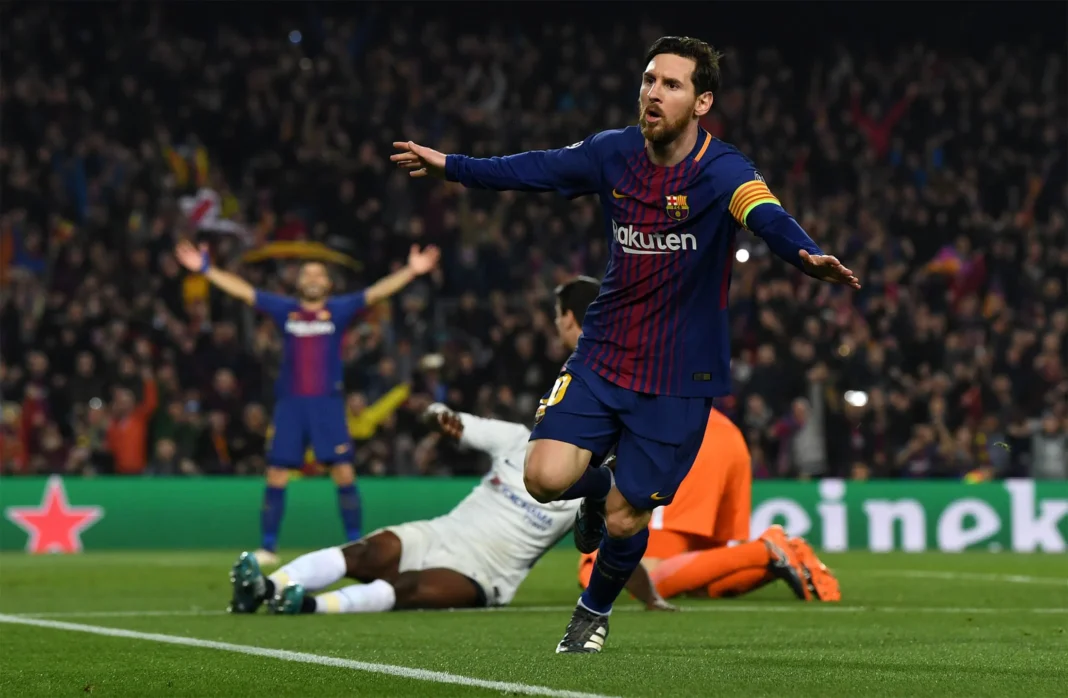
The FIFA Best Men’s Player award went to Luka Modrić in September. For the first time in eleven years Lionel Messi was not even on the podium. The footballing world largely approved. Modrić’s season was extraordinary, Messi’s World Cup was the familiar tale of brilliance swallowed by mediocrity, and the verdict felt justified. Messi won’t answer with words. He will answer with goals. Ruthless. He does not hold press conferences about criticism. The wizard does not post statements on social media. He scores.
Against Premier League opposition, he has 24 goals in 32 Champions League appearances. That record was built in the competition’s most hostile atmospheres, carved out in stadiums where others shrink. It is the kind of record that reminds Europe he does not need to speak to be heard.
Now he is 31. He carries the scar of Roma, the weight of a World Cup that went nowhere, and the sting of being told he is no longer the best. That mixture of memory and defiance creates something sharper, hungrier, more ruthless.
This is the Messi defenders dread in February: the version sharpened by rejection, fuelled by doubt, and driven by the need to prove that the greatest still walks among them. It is the Messi Barcelona need for their Champions League campaign, the one who turns criticism into punishment and doubt into fire.
Ronaldo Is Gone and Real Madrid Have No Answer
Three consecutive Champions League titles. No club had managed that in the competition’s modern era. Real Madrid did it with Cristiano Ronaldo, the man of 120 European goals, the all‑time record, the one who bent knockout ties to his will when the game demanded the impossible. Then he left for Juventus in July.
Madrid did not replace him. They handed the keys to Gareth Bale. Gifted, occasionally brilliant, but available less than half the time. It makes no sense.
Without Ronaldo, Madrid are a blade without its edge. They can cut on a good night, but they no longer pierce when the tension suffocates. In a competition decided by moments, that missing edge costs trophies.
For Barcelona, the Champions League knockout rounds suddenly look more navigable. The most dangerous man they could have faced in February is now in Turin.
The €147 Million Gamble That Might Finally Pay Off
Barcelona paid €147 million for Ousmane Dembélé in the summer of 2017 and then watched him spend most of the following season injured. In March 2018, returning from his latest setback, Messi found him in behind the defence. One touch, composed finish, and for a moment the fee made sense again. Just a glimpse, but enough.
He is fit now, and the market has noticed. Barcelona sit at 6/1 joint favourites alongside Manchester City, with Dembélé’s improvement cited specifically as a key factor by analysts tracking the odds. His value in European knockout football is not about open space. Any quick forward looks dangerous with room to run. What Dembélé offers is something rarer: the ability to receive the ball under intense pressure in congested areas, turn a defender in a single movement, and manufacture an opportunity from a situation that looked like it had none.
Those are the moments that decide Champions League ties in the second legs of knockout rounds, when space has gone and every yard is fiercely contested.
Luis Suárez is sliding from his peak and Philippe Coutinho, a €160 million signing in January 2018, is still chasing the form that defined his Liverpool years. That leaves the 21‑year‑old as the difference, the spark that turns Barcelona from very good into almost impossible to stop. Valverde knows what went wrong in Rome. His opponents should fear what comes next.